Biosecurity - Control

Once pests have become established, how can we best control or eradicate them?

Media

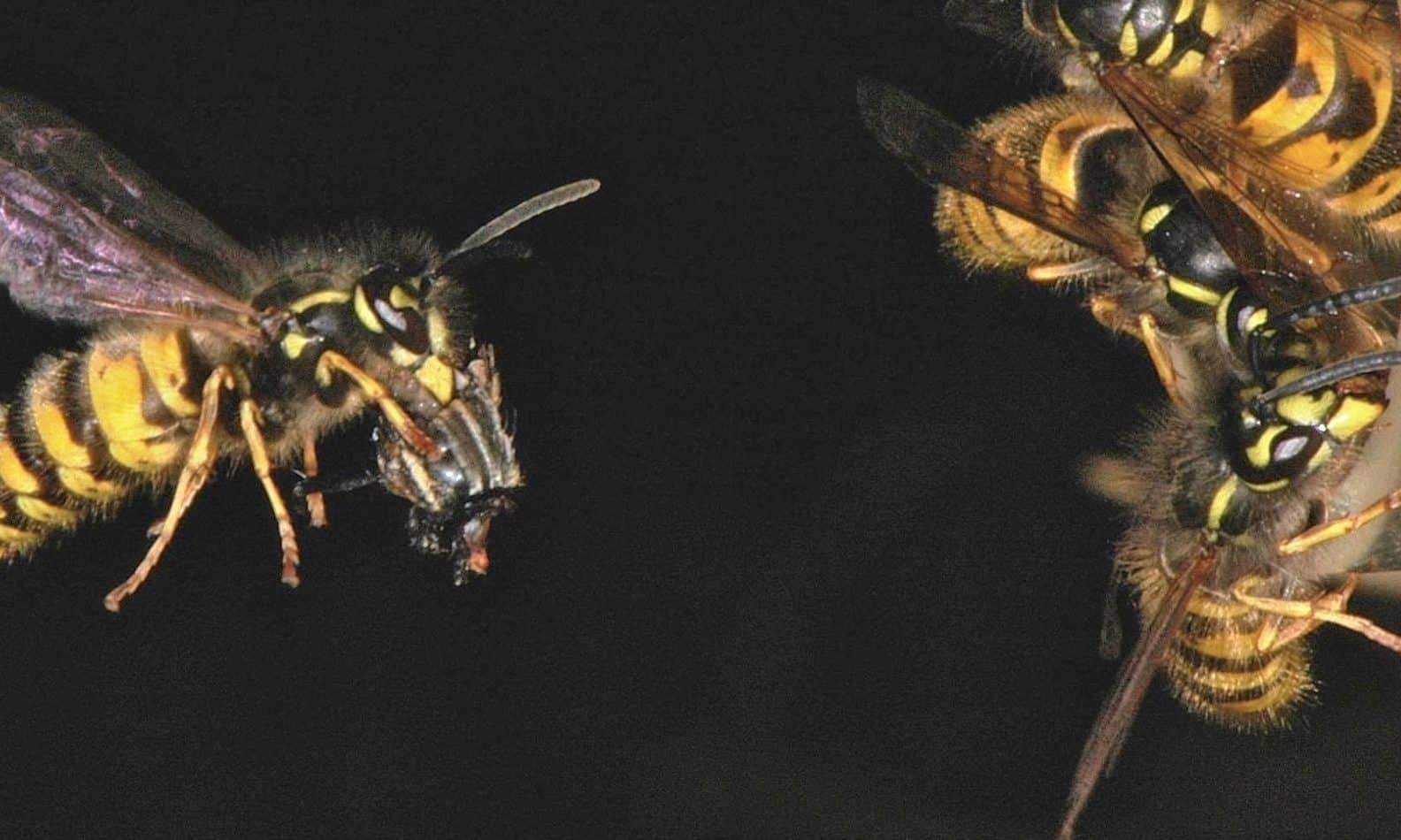
PhD students for University of Otago Josh Gilligan and Gemma McLaughlin talk about their fight against one of New Zealand’s smallest pests. 

Sting-riddled students are removing wasp nests in Dunedin for free to further their research to stop the invasive pests costing the economy more than $130million…
View Media
Publication

Biotechnologies in pest wasp control: taking the sting out of pest management for Māori businesses?

In Aotearoa New Zealand, the government’s ambitious target of becoming “predator-free” by 2050 has reignited public discussion on biotechnologies. The disproportionate abundance of German and…
View Publication
Publication

The long-term population dynamics of common wasps in their native and invaded range

We examined the long-term population dynamics of the invasive common wasp, Vespula vulgaris, in its native range in England and its invaded range in New Zealand.…
View Publication
Publication

The ecology and management of mammal invasions in forests

Here we (1) review the ecological characteristics of mammal invasions in forests; (2) characterize the range of ecological impacts on forest communities and the economic…
View Publication
Publication

High-throughput chemical screening identifies compounds that inhibit different stages of the Phytophthora agathidicida and Phytophthora cinnamomi life cycles

Here, we have screened over 100 compounds for their anti-oomycete activity, as a potential first step toward identifying new control strategies. Our screening identified eight…
View Publication
Video

Integrated Surveilance 2022

The ‘Integrated Surveillance’ team is elevating the status of the environment into Aotearoa New Zealand’s biosecurity surveillance system.   The environment-centric surveillance framework focuses on…
View Video
Publication

Ecological State Assessment Tool (ESAT): a cross-cultural natural resource management tool from Aotearoa, New Zealand

A cross-cultural approach to conservation and natural resource management will enable resource managers to access the full potential of dual knowledge epistemologies and facilitate genuine…
View Publication
Publication

Understanding divergent perspectives on introduced trout in Aotearoa: a relational values approach

To make coherent and just choices about introduced species management in postcolonial contexts such as Aotearoa, a nuanced understanding of human relationships to introduced species…
View Publication
Report

SO5 (post-border) scoping panel report

This report was put together by the Strategic Outcome 5B group, focused on novel biosecurity tools and strategies after the border. Scoping panel reports are…
View Report
Presentation

Oranga and Te Mauri o te Kauri – Melanie Mark-Shadbolt and Valance Smith

Presented by Oranga co-leads and researchers Valance Smith and Melanie Mark-Shadbolt as part of the Kaurilands Summit 2023, hosted by Ngā Rākau Taketake.   Find…
View Presentation
Presentation

Risk-based surveillance to demonstrate absence of Phytophthora agathidicida – Cecilia Arienti-Latham

Presented as part of the Kaurilands Summit 2023, hosted by Ngā Rākau Taketake.   To find out more about the Integrated Surveillance research theme please…
View Presentation
Publication

mtDNA polymorphism and metabolic inhibition affect sperm performance in conplastic mice

Although there is a general correlation between nucleotide substitutions in the mitochondrial genome (mtDNA) and a variety of metabolic pathologies, research into the impact of…
View Publication
Publication

Fitness and microbial networks of the common wasp, Vespula vulgaris (Hymenoptera: Vespidae), in its native and introduced ranges

Variation in microbial communities between populations is increasingly hypothesised to affect animal fitness and performance, including for invasive species. Pathogenic species may be lost during…
View Publication
Publication

A Systematic Review of Sources of Variability and Uncertainty in eDNA Data for Environmental Monitoring

Environmental DNA (eDNA) is becoming a standard tool in environmental monitoring that aims to quantify spatiotemporal variation for the measurement and prediction of ecosystem change.…
View Publication
Publication

Conservation pest control with new technologies: public perceptions

New genetic tools can potentially mitigate the decline of biodiversity. Democratisation of science mandates public opinion be considered while new technologies are in development. We…
View Publication
Publication

Modeling CRISPR gene drives for suppression of invasive rodents using a supervised machine learning framework

Invasive rodent populations pose a threat to biodiversity across the globe. When confronted with these invaders, native species that evolved independently are often defenseless. CRISPR…
View Publication

Enjoying our content?

Check out our inventory of research outputs and resources
Scroll to Top